Nigeria Invisible Army: How 30,000 Armed Fulani Militants Became the Country Most Complex Security Crisis
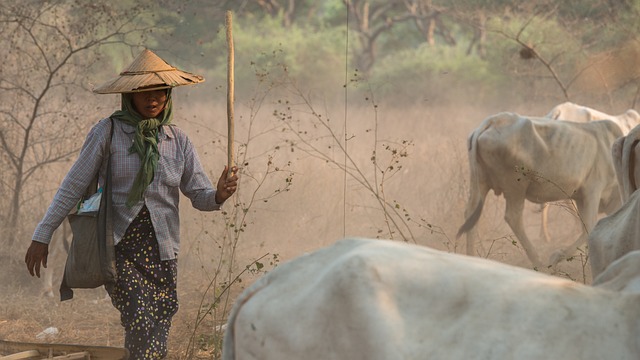
A new report has laid out what many Nigerians already knew but few had quantified with such precision: armed Fulani militants now number approximately 30,000 across the country, making them the single largest non-state armed actor operating on Nigerian territory — and a security challenge that successive governments have failed to contain.
The figure, contained in a detailed analysis by the Global Initiative against Transnational Organized Crime, describes a network of militias that have grown from localized herder-farmer disputes into a complex, geographically dispersed threat that spans nearly two-thirds of Nigeria’s 36 states. The militias, locally known as “bandits” in the north and as “Fulani militia” in the middle belt, operate with a sophistication that belies their informal structure — employing coordinated tactics, establishing supply lines, and in some cases administering local territories with their own form of justice and taxation.
What makes the phenomenon particularly intractable is its root causes. The underlying driver is environmental: climate change has reduced grazing land and pushed Fulani herders further south, into territories historically occupied by farming communities. The resulting competition over water and arable land has generated a cycle of violence that has proven resistant to conventional military solutions. Communities that were once neighbors have become enemies; killings that began as reprisals for stolen livestock have evolved into organized campaigns of terror.
“Nobody should be surprised by this number,” said Dr. Adamu Bello, a security analyst at Ahmadu Bello University in Zaria. “What has happened is that a pastoral conflict that was always there has been transformed by the availability of sophisticated weapons, the involvement of political patrons, and the collapse of state authority in vast rural areas. The 30,000 figure may actually be an underestimate in some regions.”
The security implications are severe. In addition to the regular attacks on farming villages — often resulting in mass casualties, the destruction of property, and the displacement of entire communities — the militias have demonstrated an ability to target infrastructure, kidnap for ransom on a large scale, and in some cases coordinate with extremist groups operating in the northeast, including ISIL-affiliated cells that have sought to exploit the chaos for recruitment and logistics.
The Nigerian military has launched repeated operations against the groups, with some success in particular flashpoints. But the overall trajectory has been one of expansion — both geographic and numerical — suggesting that kinetic approaches alone have not been sufficient to reverse the trend. Critics of the government’s approach say the deeper issue is political: that addressing the Fulani militia crisis requires resolving the land tenure disputes, environmental degradation, and marginalization of pastoral communities that have made violence a rational choice for tens of thousands of armed young men.
Government officials, including the Minister of Defence, have in the past disputed the scale of the threat, suggesting that media coverage has been sensationalized and that the security forces are making progress in containing the situation. But communities in the middle belt and northwest — those bearing the direct brunt of the violence — say the official narrative bears little relationship to their daily experience of insecurity, displacement, and loss.
International organizations monitoring the situation have noted that Nigeria’s Fulani militia crisis has begun to attract comparison to similar dynamics in other parts of the Sahel — where pastoralist militancy has been a factor in the broader pattern of state fragmentation that has followed the breakdown of central government authority in Mali, Burkina Faso, and Niger. The concern, analysts say, is that Nigeria — despite its relative institutional strength — is not immune to the same trajectory if the underlying drivers of conflict remain unaddressed.
For the farming communities of the middle belt, such academic debates feel distant. They measure the crisis in concrete terms: burned villages, orphaned children, harvests lost to fire, families scattered across displacement camps. The question of what to do about 30,000 armed young men moving across the countryside is not abstract for them. It is the defining fact of their lives.