Nigeria’s President Tinubu Sacks Finance Minister in Surprise Cabinet Reshuffle

ABUJA — Nigeria’s President Bola Ahmed Tinubu has dismissed his Finance Minister, Olawale Edun, in a sudden cabinet reshuffle that caught many within the government and financial markets off guard, according to official sources confirmed on Tuesday.
The sacking represents the most significant change to Tinubu’s economic team since the president assumed office in May 2023 with a mandate to stabilise Nigeria’s troubled economy and attract foreign investment. Edun, a former banker with decades of experience in public and private finance, had been the face of Nigeria’s economic reform programme — a set of policies that, while praised by international creditors, have exacted a heavy toll on ordinary Nigerians.
The immediate cause of Edun’s removal remains unclear. The presidency released no official statement at the time of publication, and palace sources indicated only that the change was "immediate" without providing further detail. A formal announcement is expected in the coming hours.
Markets React
The news sent tremors through Nigeria’s currency and bond markets. The naira weakened against the dollar in over-the-counter trading, while the Nigerian Stock Exchange recorded a sharp drop in banking sector shares — an expected response when a finance minister tied to market reforms is suddenly removed.
Edun had overseen Nigeria’s most ambitious fiscal reforms in years, including the removal of a costly fuel subsidy that saved the government billions of dollars but caused a short-term shock to consumer prices. He also managed negotiations with the International Monetary Fund over a multi-billion dollar loan programme that provided Nigeria with crucial foreign exchange reserves during a period of acute currency pressure.
Investors and diplomats will be watching closely to see who Tinubu appoints as Edun’s successor. The new finance minister will inherit an economy that has shown fragile signs of recovery but remains deeply vulnerable to external shocks — from fluctuations in global oil prices to the knock-on effects of the ongoing Middle East conflict on commodity markets.
A Troubled Inheritance
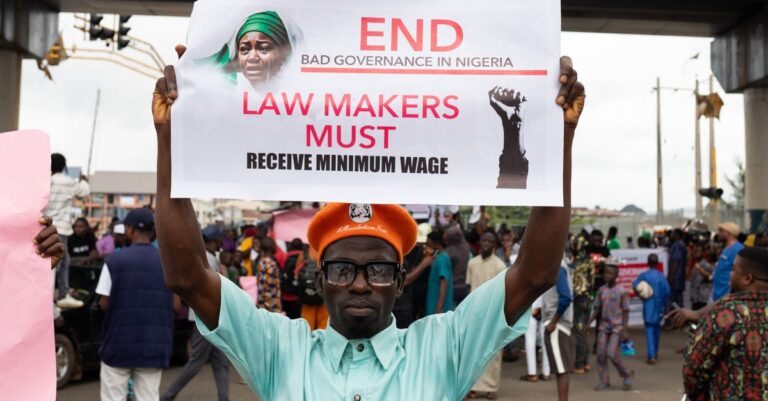
When Tinubu took office, Nigeria was facing a currency crisis, soaring inflation and an economy bruised by years of mismanagement and corruption. The removal of the fuel subsidy, while economically necessary, was politically painful and triggered protests across the country. The naira was devalued twice in quick succession, sending the cost of imports soaring and squeezing household budgets.
Edun’s tenure was also marked by efforts to restructure Nigeria’s foreign debt, improve tax collection and create a more favourable environment for private investment. The Finance Minister frequently travelled to international financial centres — London, New York, Dubai — to meet investors and reassure markets about Nigeria’s commitment to fiscal discipline.
The question now is whether the next person in the role will have the same latitude to push reforms, or whether Tinubu is signalling a shift in economic direction. Some political observers suggest the reshuffle reflects internal tensions within the cabinet over the pace and depth of changes that have squeezed ordinary citizens hardest.
What’s Next?
Tinubu’s administration has struggled to translate its reform agenda into broad-based economic growth. Unemployment remains high, the naira has lost substantial value against the dollar, and many Nigerians say they have seen little improvement in their daily lives despite official statistics pointing to macro-economic stabilisation.
The next finance minister will need to balance the demands of international creditors — who want continued fiscal consolidation — with the very real pressure from a population that has endured years of austerity. How that balance is managed will define Nigeria’s economic trajectory for years to come.
For now, the markets wait. In Nigeria, an unexpected cabinet reshuffle is rarely just a routine political adjustment — it is often the first sign of a broader shift in direction.
More From Politics & Governance

At inaugural lecture, Prof Adeniyi calls for stronger digital governance amid technological shifts in migration
Nigeria’s economic reforms yielding gains, but poverty levels remain high – IMF