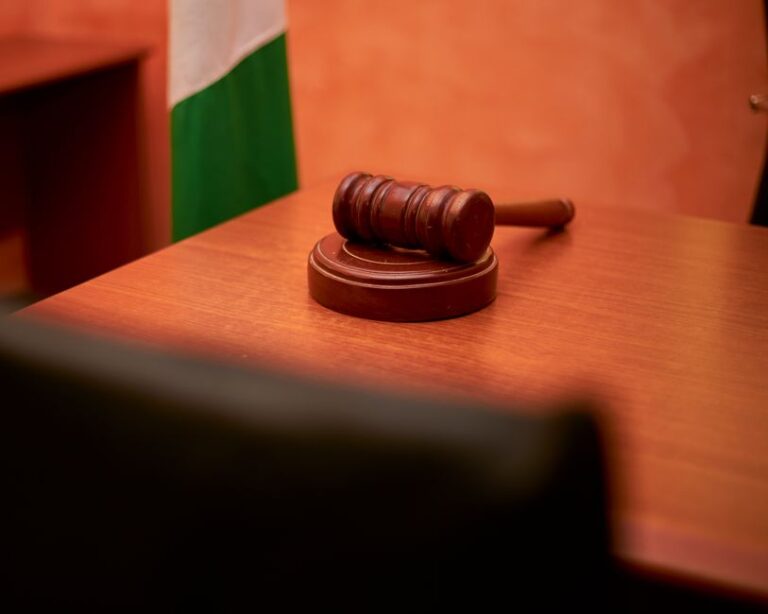
Nigeria Opens Historic Mass Trial of 500 Terrorism Suspects

Abuja, Nigeria — Nigeria has taken a dramatic step in its long struggle against insurgencies, launching one of the largest terrorism prosecution efforts in the country’s history. More than 500 suspects are now facing trial in 13 separate courtrooms simultaneously, under heavy security, in connection with a wave of attacks that have killed thousands across the country in recent years.
The mass trial, which opened this week, represents a rare attempt to deliver justice at scale in a country where most terrorism suspects are either killed in custody or simply disappear into the system without ever facing trial.
Why Now, and Why 500?
Nigeria has been battling multiple insurgencies simultaneously. Boko Haram, the group that shocked the world by kidnapping 276 schoolgirls from Chibok in 2014, continues to operate in the Northeast. Its offshoot, Islamic State West Africa Province (ISWAP), has evolved into a sophisticated fighting force with cells across the region. More recently, a wave of attacks attributed to various armed groups has targeted churches, markets, police stations, and highways.
The decision to open a mass trial reflects both political pressure and practical necessity. Human rights organizations have long criticized Nigeria’s security services for indefinite detention without trial. Five suspects were convicted and sentenced to up to 20 years in prison in preliminary proceedings last week.
The Challenge of Due Process at Scale
Conducting a fair trial for 500 people simultaneously is an extraordinary logistical undertaking. Each of the 13 courtrooms must be staffed with judges, prosecutors, defense lawyers, interpreters, and security personnel. Human rights groups are watching closely. “Mass trials carry inherent risks,” noted one legal observer. “The pressure to convict can compromise the presumption of innocence.”
Defense lawyers have already raised concerns about access to their clients, the adequacy of translation services, and the integrity of evidence chains.
What the Trial Reveals About Nigeria’s Security Crisis
The trial is also a window into the scale of Nigeria’s violence problem. 500 suspects is a large number, but analysts believe it represents only a fraction of those who have participated in terrorist attacks in recent years. Regional cooperation remains weak, and Nigeria’s security forces are stretched across multiple theaters.
A Test for Nigerian Democracy
Nigeria is Africa’s largest democracy and its biggest economy. What happens in its courts — especially in high-profile terrorism cases — sets precedents that ripple across the continent. A trial that delivers justice fairly could reinforce the rule of law. A trial that tramples procedural rights could deepen distrust of state institutions.
The world will be watching. So will the families of the victims — the mothers whose daughters were kidnapped, the communities whose markets were burned, the survivors who carry shrapnel in their bodies and nightmares in their sleep.
Sources: France 24, BBC News, Punch Newspapers
More From Conflict & Security
Sudan’s El-Obeid under intensifying drone strikes as army and RSF clash over key city

Liberia destroys over four tons of cocaine in major anti-trafficking operation