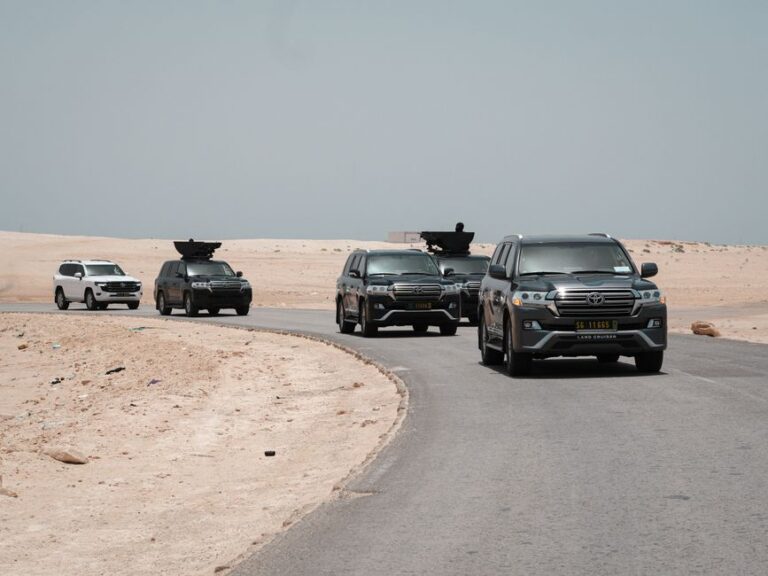
South Africa Deploys Military to Cape Town Townships as Crime Reaches Breaking Point

South Africa’s government has deployed soldiers to some of Cape Town’s most violent townships following a surge in organized crime that has overwhelmed the South African Police Service and left communities living in a state of near-constant terror. The intervention, announced in early April 2026, marks the latest in a long line of ad hoc military deployments to address what is fundamentally a policing and socioeconomic crisis — and has reignited a fierce national debate about the sustainability of using the army as a substitute for functional law enforcement.
The decision followed a series of high-profile killings in the Cape Flats — the sprawling township belt flanking Table Mountain — including the murders of two community leaders, a retired police officer, and a teenager caught in the crossfire of a gang initiation. In Mitchells Plain and Khayelitsha, residents have described nights in which gunfire is continuous, with shootouts often lasting well into the following morning.
The Crisis Is Not New — It Is Getting Worse
For residents of Cape Town’s townships, the deployment of the South African National Defence Force (SANDF) is both a source of grim familiarity and, for some, a flicker of hope. The army has been deployed to the Cape Flats before — in 2019, in 2022, and again in 2024 — each time with temporary effect that dissipated once the soldiers were withdrawn.
The underlying drivers of violent crime in the Cape Flats are structural and deep-rooted. Decades of apartheid-era spatial planning left these communities geographically isolated, economically marginalised, and underserviced. Gangsterism took root in the 1970s and 1980s as a response to the power vacuum created by forced removals and the banning of political organisations. Today, the drug trade — particularly the methamphetamine market known locally as "tik" — has entrenched and expanded those criminal networks to an industrial scale.
"We have been waiting decades for real investment in our schools, our clinics, our police stations," said Noluthando, a community activist in Khayelitsha. "Every few years, they send soldiers. The soldiers leave. The guns remain."
What the Military Can and Cannot Do
The SANDF deployment is, by its nature, a blunt instrument. Soldiers are trained for conventional warfare, not community policing. They lack the investigative capacity, local knowledge, and community liaison skills that effective crime prevention requires. What they can do — and what they are being tasked to do in the current deployment — is static patrols, vehicle checkpoints, and support operations alongside police units.
The police-to-population ratio in South Africa is roughly 1 officer per 400 citizens — a figure that falls well short of international benchmarks and is distributed unevenly, with wealthy suburbs receiving far more coverage than impoverished townships.
The Socioeconomic Dimension
No military deployment, however large, can address the root causes of township crime. Employment rates in Cape Town’s townships remain stubbornly high, particularly among young people. Drug addiction is widespread and treatment infrastructure is scarce. Prison systems, where gang leaders continue to run operations from behind bars, are overcrowded and poorly managed.
"The soldiers will make some people feel safer for a few months," said Dr. Kim M. Berman, a criminologist at the University of the Western Cape. "But you cannot bomb your way out of a social problem. You cannot shoot your way out of addiction. You cannot arrest your way out of poverty."
A Government Under Pressure
The timing of the deployment is politically sensitive. South Africa’s ruling ANC party is facing mounting electoral pressure, particularly in Western Cape — a province it does not control — ahead of local government elections. The opposition Democratic Alliance, which governs the Western Cape, has been vocal in its criticism of the national government’s crime policies while simultaneously requesting the military deployment.
For now, soldiers are on the streets. Residents are watching, cautiously hopeful and deeply skeptical in equal measure. Whether this deployment produces a different outcome than those that preceded it remains to be seen.
Image: Pixabay / Free to use
More From Conflict & Security
South Africa probes death of Nigerian man who collapsed during arrest
Arrest of Nigerian soldier over alleged links to criminals deepens scrutiny of military conduct