Gene Editing Offers Hope for Africa’s Sickle Cell Patients — But Price Tag Makes Cure a Distant Dream
A new wave of gene-editing therapies for sickle cell disease — including CRISPR-based treatments already approved in the United States and United Kingdom — is raising unprecedented hope among African scientists, patients, and policymakers, even as they confront the brutal reality that the treatments remain astronomically expensive and entirely out of reach for the continent that carries the disease’s heaviest burden.
Sickle cell disease, an inherited condition that causes red blood cells to become rigid and sickle-shaped, affects more people in Africa than anywhere else on Earth. Across sub-Saharan Africa, an estimated 1.1 million babies are born with sickle cell each year — representing roughly 85 percent of global new cases. In some West African nations, as many as 3 percent of all newborns carry the sickle cell gene.
The Science: A Revolution Underway
The approval of CASGEVY — the world’s first CRISPR-based therapy for sickle cell disease — by the US Food and Drug Administration in late 2023 and by the UK’s Medicines and Healthcare products Regulatory Agency in 2024 marked a genuine revolution in the treatment of the disease. Clinical trial data showed that the therapy, which involves editing patients’ own stem cells to produce functional hemoglobin, produced sustained pain-free remissions in the vast majority of patients treated.
Uganda moved fastest among African nations, launching a national newborn screening program for sickle cell in March 2026 — offering free testing to all infants born in participating health facilities. Health Minister Dr. Jane Aceng described the program as “the first step toward a future where no Ugandan child dies simply because they were born with sickle cell.”
But screening is a far cry from cure. The gene-editing therapy itself costs approximately $2.2 million per patient in the United States — a price tag that places it in the realm of fantasy for health systems where annual public health spending per capita can be less than $50.
Bone Marrow Transplants: A More Accessible Bridge
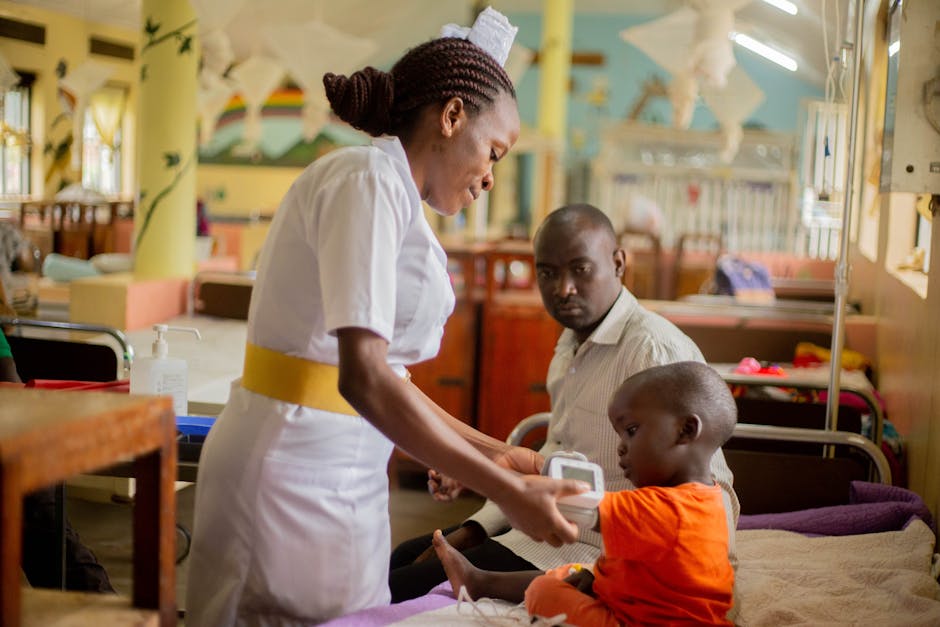
For now, African clinicians are focusing on expanding access to bone marrow transplants — a curative treatment that has been available for decades and is relatively more affordable, though still expensive by African standards. Several major African hospitals, including Korle Bu Teaching Hospital in Ghana and the University of Teaching Hospital in Lagos, have established or are developing dedicated transplant programs.
“A transplant costs maybe $30,000 to $50,000 here versus $2 million for gene therapy in America,” said Dr. Nneka Odu, a hematologist at Lagos University Teaching Hospital. “That’s still enormous for our health systems, but it’s achievable — if we get the investment.”
Building African Clinical Capacity
The path to making advanced sickle cell therapies truly accessible in Africa requires solving multiple challenges simultaneously: training the hematologists, nurses, and lab technicians to deliver complex treatments; establishing the laboratory infrastructure for stem cell processing; securing the financing models that can make treatment sustainable; and building the regulatory frameworks that will allow African countries to evaluate and eventually manufacture gene therapies locally.
Several African governments have begun taking tentative steps. Nigeria, which has the world’s largest sickle cell population — estimated at over 4 million people — launched a National Sickle Cell Center in Abuja last year, with a mandate to develop affordable, Africa-specific treatment protocols.
South Africa’s University of Cape Town has become a hub for gene therapy research in Africa, with a program specifically focused on adapting CRISPR technologies for conditions prevalent on the continent. Professor Sir John Martin, a British hematologist who has partnered with the UCT team, said Africa has the scientific talent to lead on this work — but needs investment.
The Long Road Ahead
For patients like 19-year-old Amina Diallo, who has spent her life managing pain crises and avoiding strenuous activity, the talk of revolutions feels distant. “Every time I hear about these cures, I think, ‘Wonderful — for Americans,'” she said in an interview at a sickle cell clinic in Abuja. “I am happy for them. But I need something I can actually use.”
Her physician, Dr. Funmilola Olaoye, is more optimistic. “Ten years ago, nobody in Nigeria was talking about transplants for sickle cell,” she said. “Now we are doing them. The gap between hope and access is narrowing — but we need to narrow it faster.”
Africa Must Lead Its Own Destiny
African scientists and global health advocates increasingly argue that the continent cannot simply wait for wealthy nations to make gene therapies affordable. Africa’s pharmaceutical sector — still nascent but growing — may, in the medium term, be capable of producing generic versions of gene therapies once patents expire or compulsory licensing frameworks are invoked.
Uganda’s approach — starting with screening rather than waiting for cures — reflects a pragmatic middle ground: doing what is possible now, while building the infrastructure and advocacy to make the revolutionary treatments accessible within a generation.
“We cannot keep watching our children suffer while a cure exists that they will never see,” said Dr. Aceng. “Uganda’s message to the world is: help us close this gap. But our message to ourselves is: start now, with what we have.”
More From Politics & Governance

London council seizes social housing flat rented by Sierra Leone first lady

At inaugural lecture, Prof Adeniyi calls for stronger digital governance amid technological shifts in migration