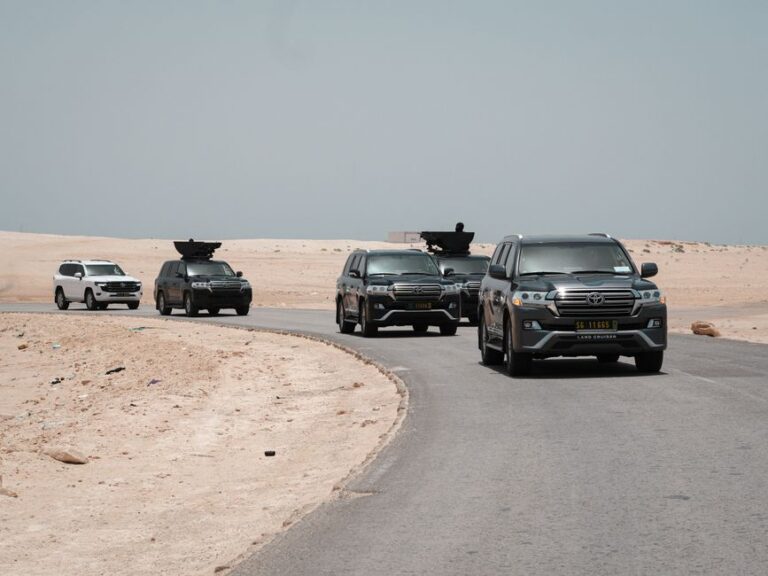
Over 1,800 Civilians Killed in Burkina Faso Since 2023, Human Rights Watch Reports
More than 1,800 civilians have been killed in Burkina Faso since the beginning of 2023 in attacks by both jihadist insurgent groups and government security forces, according to a comprehensive new report by Human Rights Watch — documenting what the organization calls “a staggering and unrelenting toll on ordinary Burkinafas” that has received insufficient international attention.
The 87-page report, released Thursday, documents 26 major incidents of civilian harm across Burkina Faso’s sahel and eastern regions over the past three years, including deliberate killings of villagers by armed Islamists, mass executions attributed to the government’s volunteer defense corps, and entire communities burned to the ground in tit-for-tat violence that has spiraled far beyond any conventional counterinsurgency.
The Human Cost in Numbers
Human Rights Watch documented 1,814 civilian deaths between January 2023 and December 2025, based on field interviews, satellite imagery, medical records, and documentation from local NGOs. The actual figure, the organization says, is almost certainly higher, given the difficulty of accessing conflict zones and the underreporting of attacks in remote villages.
Among the worst documented incidents: the October 2024 attack on the village of Kounah in Soum Province, where armed assailants killed 94 civilians over a 12-hour period. The attackers specifically targeted men of fighting age and boys as young as 12,RC-wielding Islamist fighters killed villagers in their homes and in the local market.
Also documented: the April 2023 execution of 33 suspected Islamist collaborators by members of the Volunteers for the Defense of the Motherland (VDP), a civilian defense auxiliary force established by the military junta. HRW says the VDP killings, carried out in Barsalogho, Central North Region, constituted war crimes.
Jihadist Groups: A Fragmented but Deadly Threat
Burkina Faso’s jihadist insurgency is primarily driven by two umbrella movements: JNIM (Jama’at Nusrat al-Islam wal-Muslimin), linked to Al-Qaeda in the Islamic Maghreb, and the Islamic State in the Greater Sahara (ISGS). Both groups have expanded rapidly since 2019, exploiting local grievances, porous borders, and the weakness of state institutions in the north and east.
What makes the current phase of the conflict especially complex is its fragmentation. Beyond the main jihadist groups, dozens of smaller local militias — some aligned with JNIM or ISGS, others operating independently — have proliferated, making it difficult to attribute attacks with certainty and complicating any prospect of negotiated settlements.
The Junta’s Response: Force and Frustration
Burkina Faso’s military junta, which seized power in January 2022 and again in a subsequent coup in late 2022, has staked its legitimacy on delivering security. Under Captain Ibrahim Traoré, who leads the country as interim president, the government has adopted an aggressive counterinsurgency posture — expanding the VDP civilian militia program, granting security forces broader powers of detention, and accepting, by its own acknowledgment, that civilian harm is an regrettable but unavoidable byproduct of war.
“We are fighting an enemy that hides among civilians,” Traoré said in a televised address last year. “Our forces sometimes make mistakes. But every effort is made to avoid civilian casualties.”
Human Rights Watch’s findings challenge that narrative directly. The organization says it documented at least 12 incidents where Burkinabè security forces or VDP members deliberately targeted civilians — including in one case a deliberate attack on a displacement camp that killed 47 people.
Displacement Reaches Crisis Level
More than 2.1 million people are now internally displaced in Burkina Faso — a figure that has tripled in two years. The country’s humanitarian response plan is less than 30 percent funded, leaving aid organizations unable to meet even basic needs in displacement camps.
“We are seeing a humanitarian catastrophe unfolding in slow motion,” said Dr. Ousmane Zongo, Burkina Faso director for the International Committee of the Red Cross. “People are trapped between jihadists on one side and security forces on the other, with nowhere to turn.”
A Conflict the World Is Ignoring
Analysts and aid workers have expressed frustration that Burkina Faso’s crisis receives a fraction of the international attention devoted to conflicts in Ukraine, Gaza, or Sudan — despite a civilian death toll that, per capita, rivals any of those crises.
“Burkina Faso is one of the most neglected humanitarian crises in the world right now,” said Fatoumata Diallo, West Africa director at Crisis Action. “Two million displaced, thousands dead, and the international community is largely looking away.”
Human Rights Watch has called on Burkina Faso’s allies — including France, which withdrew its forces in 2023 after the junta demanded it, and Russia, whose Africa Corps contractors have reportedly been deployed in advisory roles — to press the government on civilian protection. The junta, for its part, has rejected external criticism as an infringement on Burkina Faso’s sovereignty.
More From Conflict & Security
South Africa probes death of Nigerian man who collapsed during arrest
Arrest of Nigerian soldier over alleged links to criminals deepens scrutiny of military conduct