Uganda Secures 540 Million World Bank Funding to Transform Cities and Municipalities
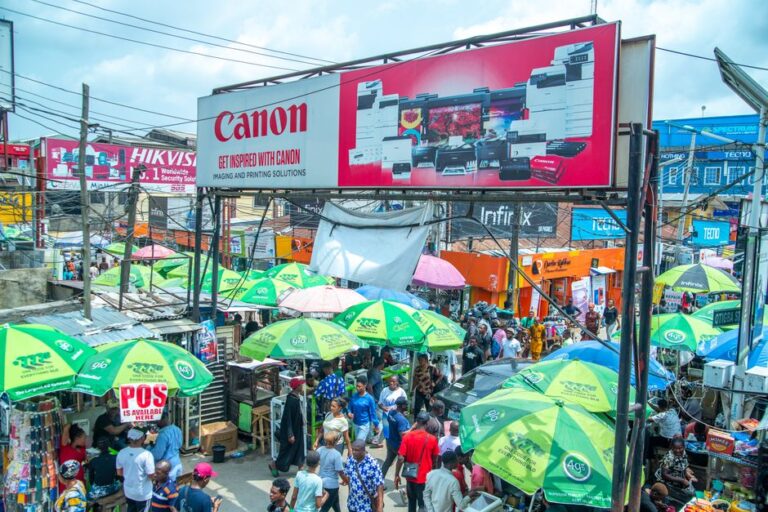
Uganda has secured over 2.1 trillion shillings — equivalent to USD 540 million — in financing from the World Bank to launch a sweeping national urban transformation programme, the largest such investment in the country’s cities and municipalities in a decade.
The Uganda Cities and Municipalities Infrastructure Development (UCMID) programme targets ten cities, 26 municipalities, and 13 refugee-hosting districts. The funding consists of a USD 429 million IDA Credit, USD 80 million IDA Grant, and USD 31 million Shorter Maturity Loan.
**A Climate-Smart Urban Push**
The programme’s stated goal is to improve urban management and expand climate-smart infrastructure at a moment when Uganda’s urban population — currently at 27% of the total according to the 2024 census — is projected to surpass its rural population within the next two decades.
The World Bank’s Country Manager for Uganda, Francisca Ayodeji (Ayo) Akala, said the timing was critical. “With Uganda’s urban population projected to more than double in the next two decades, it is essential that this rapid expansion translates into productive jobs for a youthful labour force rather than resulting in fragmented urban sprawl and increased informality,” she said.
The programme comes as many of Uganda’s secondary cities face recurrent flooding, with Jinja, Kampala, Kasese, Kisoro, and Mbale periodically overwhelmed by extreme weather events linked to climate change. UCMID is specifically designed to build infrastructure that reduces flood risk while simultaneously improving mobility and economic opportunities.
“UCMID is aimed at supporting local governments to deliver climate-smart infrastructure that reduces flooding, improves mobility, and creates opportunities for youth and women,” Akala said. “Importantly, the programme will also strengthen services and livelihoods in refugee-hosting areas, so that refugees and their hosts can benefit together from safer, more productive towns and cities.”
**40,000 Jobs on Offer**
Beyond infrastructure, the programme is expected to generate at least 40,000 direct jobs — 20,000 permanent positions in operations and services, and an equal number of short-term construction jobs. Key deliverables include all-weather roads, storm-water drainage systems, street lighting, and public markets.
The programme appraisal notes that most urban areas in Uganda currently rely on “basic” plans that are neither integrated with spatial nor economic development strategies — a gap the programme aims to fill.
**Building on a Proven Record**
UCMID succeeds the Programme for Results Uganda Support to Municipal Infrastructure Development (USMID), which closed in 2024 after constructing over 215 kilometres of all-weather roads, erecting 1,800 street lights, and installing over 40 kilometres of cycling, bus, and parking infrastructure across 14 municipalities. A 2021 community satisfaction survey in USMID areas returned a 94% approval rating.
UCMID will now extend coverage to 15 additional municipal governments — Bugiri, Bushenyi-Ishaka, Ibanda, Iganga, Kapchorwa, Kisoro, Kotido, Koboko, Kumi, Masindi, Mityana, Nebbi, Njeru, Rukungiri, and Sheema — as well as 13 refugee-hosting districts and ten cities including Arua, Fort Portal, Gulu, Hoima, Jinja, Lira, Mbale, Mbarara, Masaka, and Soroti.
*Source: The Independent (Kampala) / AllAfrica / World Bank*