Senegal Unveils Sweeping Reforms to Gold Mining Sector, Raises Royalties and Tightens Local Content Rules
Senegal’s government has announced a comprehensive overhaul of its mining regulatory framework, raising royalties on industrial gold extraction, imposing stricter environmental obligations, and introducing binding local content requirements that will fundamentally reshape how multinational mining companies operate in the country. The announcement, made by the Ministry of Mines and Geology in late March, represents the most significant intervention in Senegal’s extractive sector since the mining code was last revised in 2016.
What the reforms require
Under the new framework, royalties on gold extracted by industrial operators will increase from 3% to 5% of gross turnover. Companies will also be required to achieve a minimum of 80% local employment in non-technical positions within three years of the law’s full implementation, and to source at least 40% of their service inputs from Senegalese-owned businesses. Environmental compliance bonds will be doubled, and operators who fail to rehabilitate mining sites to agreed standards will lose their closure certificates, blocking future license renewals.
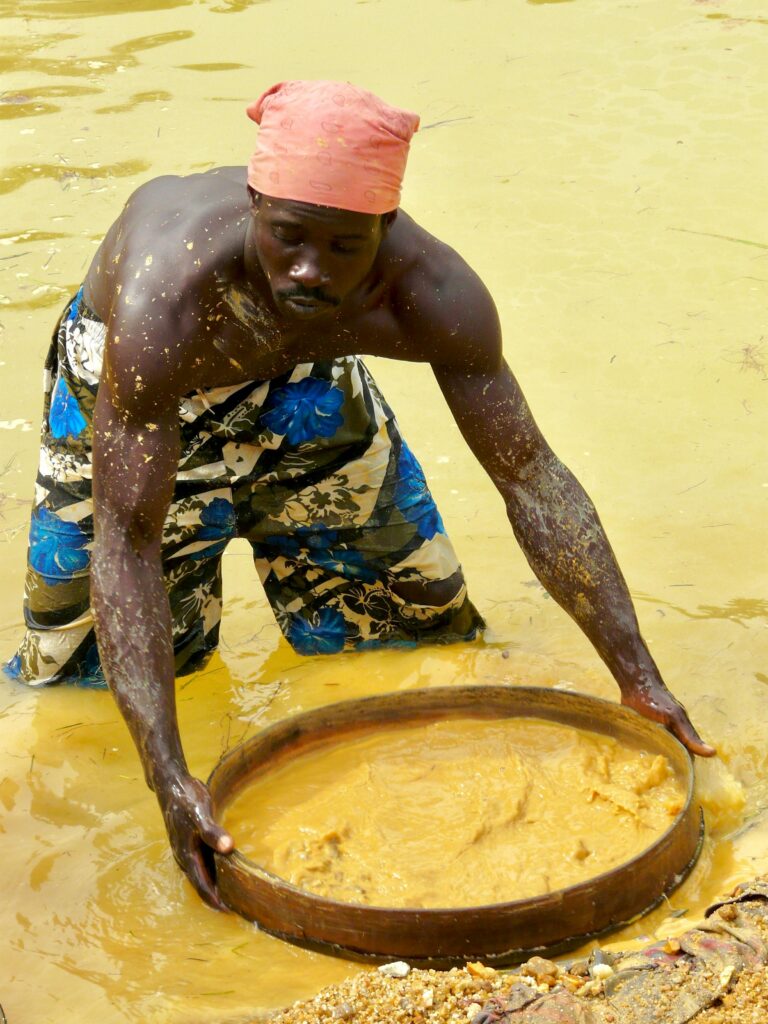
For Senegal’s artisanal mining sector—the informal economy of small-scale prospectors who work the alluvial deposits in the country’s south and east—the government has announced a formalization program. An estimated 600,000 to one million Senegalese are believed to work in artisanal gold mining, often in precarious conditions with no legal protections or formal contracts. The new framework creates a licensing pathway that will give artisanal miners priority access to smaller concession areas and entitle them to basic social protections.
Background: why now?
The timing of the reform is driven by a combination of domestic political pressure and a global reassessment of how Africa’s mineral wealth is distributed. Violent confrontations between community members and employees of large-scale mining companies in the Kédougou region in 2024 and 2025 brought international attention to the social costs of Senegal’s mining boom. Local communities alleged that company security forces had destroyed crops and water sources, and that royalty payments promised under the 2016 code had not been fully distributed to affected municipalities.
Senegal’s largest industrial gold mine—the Béré Béré operation in the east—produced approximately 15 tonnes of gold in 2025, making it one of West Africa’s most productive mines and a cornerstone of the country’s export economy. The mine is estimated to contribute around 5% of Senegal’s GDP and a significantly larger share of its fiscal revenues.
Industry’s response
Industry groups have responded cautiously. The African Mining Council warned that Senegal’s new royalty rate would place it among the highest-taxed mining jurisdictions in Africa, potentially deterring the exploration investment needed to sustain production levels over the medium term. Exploration budgets across West Africa have been declining for three consecutive years, reflecting global uncertainty in commodity markets and rising operating costs.
Local community impact
For Senegalese communities living near mining operations, the reforms are being watched closely. The new local content rules, if enforced, could meaningfully change who benefits from mining activity. Currently, the economic spillovers from large mines into surrounding communities are often limited: mine workers are frequently brought in from outside, service contracts go to established international firms, and the fiscal benefits of royalty payments are distributed nationally rather than retained locally.
Africa’s broader reckoning with extractive governance
The broader context is Africa’s ongoing reckoning with extractive governance. From the Democratic Republic of Congo’s reassertion of state control over cobalt resources to Tanzania’s standoff with Acacia Mining and Zambia’s反复调整 of copper royalties, African governments are increasingly willing to use regulatory tools to extract more value from their mineral wealth. Senegal’s reform fits squarely within this trend.
What remains to be seen is whether the new rules can be effectively implemented. Senegal’s mining regulatory agency has limited technical capacity, and the informal artisanal sector operates largely outside formal governance structures. The success of the reform will depend not only on what the law says, but on whether the government can build the institutions needed to enforce it.
More From Politics & Governance
Tunisians Mark Five Years of Emergency Rule With Renewed Calls for Saied to Step Down
South African President Ramaphosa Secures Temporary Halt to ‘Farmgate’ Impeachment Inquiry