The Long Campaign: Can Macky Sall Still Win the Race for UN Secretary-General?
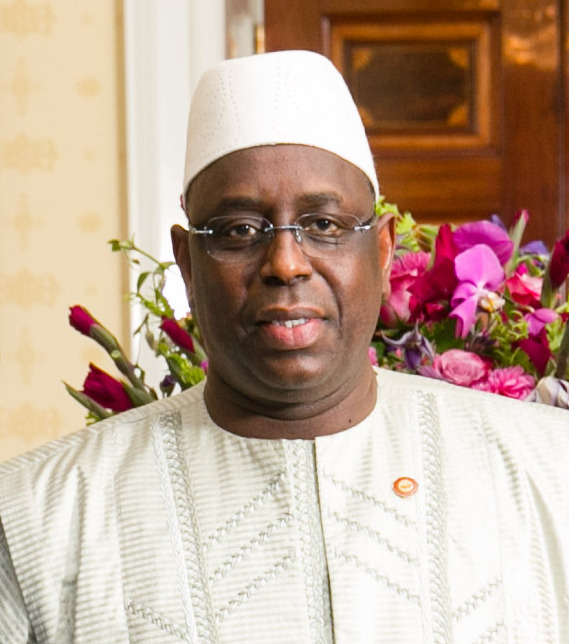
When Macky Sall left the presidency of Senegal in April 2024 after twelve years at the helm, he did not disappear into quiet retirement. Within months, his political allies had confirmed what had been widely speculated: the former president was mounting a campaign for the world’s top diplomatic job — the United Nations Secretary-General. Nearly two years into that campaign, the question is no longer whether Macky Sall is a credible candidate. It is whether the political mathematics of the Security Council will allow an African to reclaim the post that Kofi Annan held with such distinction two decades ago.
The formal process for selecting the next Secretary-General — the incumbent Antonio Guterres’ term ends in January 2027 — has not yet opened. But the informal campaign, conducted through bilateral meetings, regional summits, and quiet diplomatic conversations in New York, has been underway for some time. Sall is one of several candidates reportedly in the frame, but he is arguably the most prominent African name in circulation.
Why Africa Feels It Is Time
The case for an African Secretary-General rests on both arithmetic and principle. Africa is the only continent that has never held the top UN job on a permanent basis — Kofi Annan, though Ghanaian, served as Acting Secretary-General before the role was formalised, and his successor, Ban Ki-moon, was South Korean. The composition of the Security Council — where the five permanent members (US, UK, France, Russia, China) hold veto power — means that the selection is as much a geopolitical negotiation as a merit-based process.
African Union members have made clear that they will press hard for one of their own in 2026. The AU’s formal endorsement process, which has already begun internally, is expected to converge around a single candidate to avoid splitting African votes. Sall’s supporters argue that his credentials — former head of state, former African Union chairperson, experienced international diplomat — make him the strongest candidate the continent has put forward in years.
The Complications
But the path is full of obstacles. For one, Sall’s candidacy has not been without controversy at home. His twelve-year presidency, while marked by significant infrastructure development and macroeconomic stability, was also characterised by accusations of democratic backsliding — including a contested constitutional referendum in 2021 that extended presidential term limits and a political environment that critics said was increasingly hostile to opposition voices. Human rights organisations documented restrictions on press freedom and assembly during his tenure.
These concerns have not gone unnoticed in Western capitals, and UN Secretary-General selections are highly sensitive to the politics of the P5. While Russia and China might find Sall palatable as a consensus African candidate, the United States and some European members have historically been more cautious about candidates from countries with complex human rights records.
The Regional Field
Competing within Africa itself is not simple. Several other African figures have been mentioned: Djibouti’s President Ismail Omar Guelleh (who has been in power since 1999), former Nigerian foreign minister Zainab Bangura, and Rwanda’s Foreign Minister Vincent Biruta. Uganda’s President Yoweri Museveni, a longstanding AU ally, has also been mentioned in some circles, though his candidacy would be highly controversial given Uganda’s own human rights record.
The AU’s internal consultations are expected to produce a shortlist by mid-2026. The eventual endorsed candidate will need to demonstrate broad continental unity — a challenging ask given the continent’s diverse political landscape and competing national interests.
The P5 Factor
Ultimately, any Secretary-General campaign is a P5 campaign. The permanent members of the Security Council control the process, and each has its own preferences and red lines. China has historically supported African candidates and could be a natural ally for Sall. Russia, with which relations have grown warmer in recent years, might also be open. The United States, however, has shown a preference in recent selections for candidates with whom it has had close working relationships — a consideration that may not favour Sall given the complexities of US-Senegal relations in recent years.
The coming months will be decisive. As the informal campaign shifts to formal campaigning, Sall will need to build a coalition that spans not just Africa but the broader Global South, while also managing the sensitivities of the Security Council’s permanent members. It is a formidable challenge — but for a man who spent twelve years at the summit of Senegalese politics, it may be the challenge he was born for.
Image: President Macky Sall — Wikimedia Commons (Public Domain)