Riyadh’s New Frontier: How Saudi Arabia Is Quietly Securing Africa’s Critical Minerals
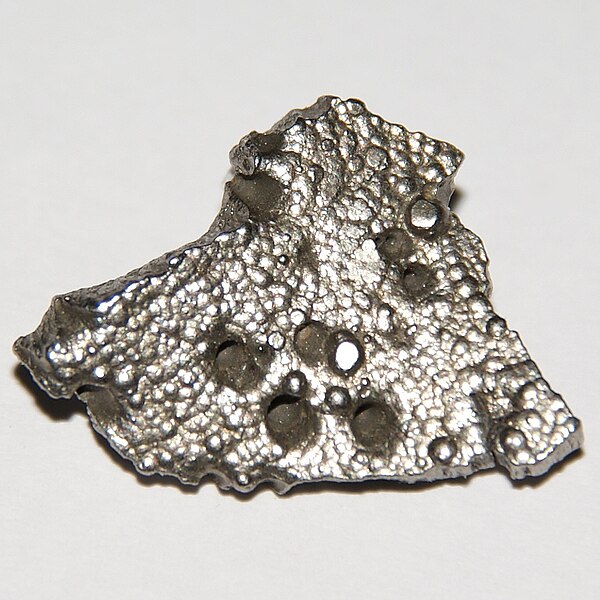
When Saudi Arabia’s Public Investment Fund (PIF) quietly acquired a 12 percent stake in a Congolese cobalt refiner last year, few outside the mining trade press noticed. But in industry corridors from Johannesburg to Nairobi, the move was read as something significant: the clearest signal yet that Riyadh is pursuing a deliberate, long-term strategy to secure African critical minerals — and that Africa had better decide how it wants to respond.
The Kingdom’s ambitions in African minerals have been building for several years, accelerated by Vision 2030, Crown Prince Mohammed bin Salman’s sweeping reform programme that seeks to diversify the Saudi economy away from oil. Central to that diversification is the development of clean energy value chains — solar panels, wind turbines, electric vehicle batteries — all of which depend heavily on minerals that Africa has in abundance: cobalt, lithium, manganese, nickel, and rare earth elements.
Following the Chinese Playbook
In many ways, Riyadh is following a template perfected by Beijing over the past two decades. Chinese state enterprises and private firms have invested hundreds of billions of dollars in African mining operations, processing infrastructure, and logistics networks, giving China dominant control over the supply chains that the global energy transition requires. Saudi Arabia appears intent on building a parallel, if smaller, model.
Unlike China, which built its African mining presence over decades through a mix of state-led deals and private investment, the Saudi approach has been faster and more capital-intensive. PIF and affiliated Saudi entities have made targeted acquisitions across the mineral value chain, focusing on processing capacity as much as extraction rights. The logic is strategic: controlling the refinery is often more valuable than controlling the mine.
African Governments Are Paying Attention
African governments, many of which have long felt short-changed by extractive industry deals with Western and Chinese firms, are watching the Saudi entry with a mixture of interest and wariness. On one hand, a new major investor could increase competition for mining assets, potentially improving the terms African governments can negotiate. On the other hand, there is concern that the new entrants will replicate the worst features of previous deals: opacity, weak local content requirements, and environmental shortcuts.
South Africa’s Mineral Resources Minister recently noted that his government was in active discussions with Saudi counterparts about investment frameworks that would require significant local processing before ores are exported — a stance that reflects a broader African push for value addition on the continent rather than raw export models.
The Cobalt Question
At the centre of the strategic competition is the Democratic Republic of Congo, which produces roughly 70 percent of the world’s cobalt — a key input in lithium-ion batteries for electric vehicles. DRC officials have long sought to move beyond a raw ore export model, pushing instead for domestic refining capacity that would capture more of the value chain. The arrival of Saudi investment interest has given those ambitions new urgency — and new complexity.
Several deals are reportedly in advanced negotiation, including a proposed joint venture that would build a cobalt sulphate processing plant in Kolwezi, one of the DRC’s main copper-cobalt mining belts. If concluded, the deal would be the largest Saudi investment in African mining to date.
A Competitive Landscape for Africa
The growing interest from Saudi Arabia joins an already crowded field. Chinese firms remain dominant in African critical minerals. American companies, backed by the US government’s Friendshoring agenda, are increasingly active. European investors, motivated by supply chain security concerns following the energy crisis, are also circling.
For African nations, this competition is a potential gift — if they can manage it wisely. The challenge is to attract investment that develops local industries and creates jobs, without repeating the patterns of the colonial and post-colonial extractive economy that left many African nations richer in resources and poorer in development outcomes.
Image: Cobalt ore production — Wikimedia Commons (Public Domain)
More From Politics & Governance

Tunisians Mark Five Years of Emergency Rule With Renewed Calls for Saied to Step Down

South African President Ramaphosa Secures Temporary Halt to ‘Farmgate’ Impeachment Inquiry