Saudi Arabia’s Rush for African Critical Minerals: Riyadh’s Strategic Scramble for Copper, Cobalt, and Lithium

Saudi Arabia is accelerating a push into African critical mineral markets at a pace that has startled competing investors and attracted sharp attention from China, which has long treated the continent’s mineral wealth as a strategic priority. Riyadh’s crown prince Mohammed bin Salman, through the Kingdom’s Public Investment Fund and a constellation of state-linked enterprises, has authorized a wave of exploratory investments, acquisition offers, and partnership proposals targeting copper, cobalt, lithium, and nickel projects across at least a dozen African nations.
The push reflects Saudi Arabia’s broader effort to diversify an economy still heavily dependent on oil revenues, and to position the Kingdom as a global industrial power rather than merely a hydrocarbon supplier. Vision 2030, the economic transformation programme championed by the crown prince, identifies critical minerals as essential to the renewable energy, electric vehicle, and semiconductor manufacturing industries that Saudi Arabia wants to build at scale.
Africa as the Missing Piece
The arithmetic is straightforward: the energy transition requires enormous quantities of copper for wiring and renewable infrastructure, cobalt and lithium for batteries, and nickel for stainless steel and next-generation battery chemistries. Africa holds the world’s largest known reserves of cobalt, the second-largest reserves of platinum group metals, vast copper belts in Zambia and the Democratic Republic of Congo, and emerging lithium opportunities in Zimbabwe, Namibia, and Mali.
For Saudi Arabia, which has negligible domestic reserves of most critical minerals, Africa is the obvious place to look. The Kingdom has no shortage of capital and, increasingly, the technical and operational expertise to pursue large-scale mining projects.
The China Question
China has spent two decades building a dominant position in African minerals through a combination of state-backed loans, infrastructure-for-resources deals, and direct investment by Chinese state enterprises. Chinese companies control a significant share of cobalt production in the DRC, copper processing in Zambia, and nickel operations across multiple African countries.
Saudi Arabia’s entry into African mining does not occur in a vacuum. Some analysts see the Saudi push as complementary rather than competitive. Others are more skeptical, noting that even well-intentioned new investors require careful contract management if the continent is to avoid simply swapping one form of resource dependency for another.
Who’s On the Saudi Target List
Saudi-linked entities have expressed interest in copper projects in Zambia and Ecuador, cobalt operations in the DRC, lithium exploration in Zimbabwe and Namibia, and nickel opportunities in Botswana. Formal partnership frameworks have been signed with at least three Southern African Development Community (SADC) member states, with announcements expected in the coming months.
The pace of the Saudi push is unlikely to slow. Vision 2030’s industrial ambitions require a reliable mineral supply that domestic and conventional sources cannot provide. Africa is, by geography and geology, the logical answer. The continent’s governments will be watching closely to ensure the latest scramble for African resources produces genuine development returns rather than another chapter in a long history of external exploitation.
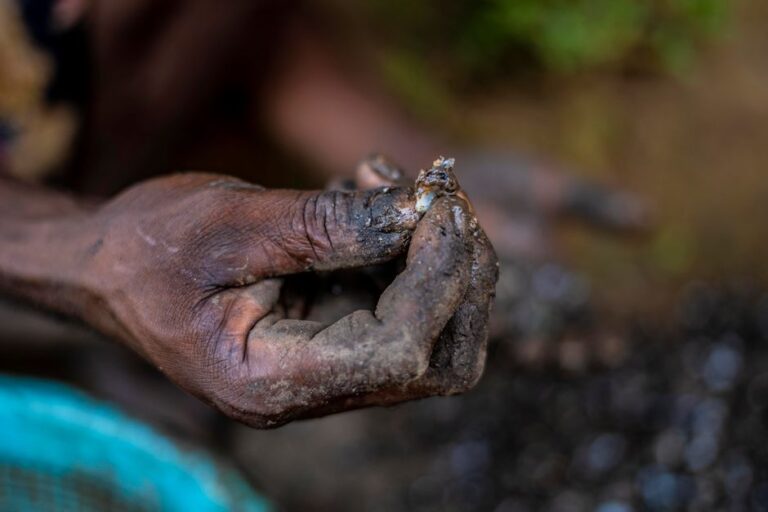
Image: Copper mining operations in Zambia (Wikimedia Commons, CC BY) — representative African mining imagery.