
Democratic Republic of Congo’s army has announced the launch of a formal disarmament operation against the Democratic Forces for the Liberation of Rwanda — the FDLR — a militia group whose origins trace directly to the 1994 Rwandan genocide and which Rwanda has long demanded be neutralised as a condition for any lasting peace in the region.
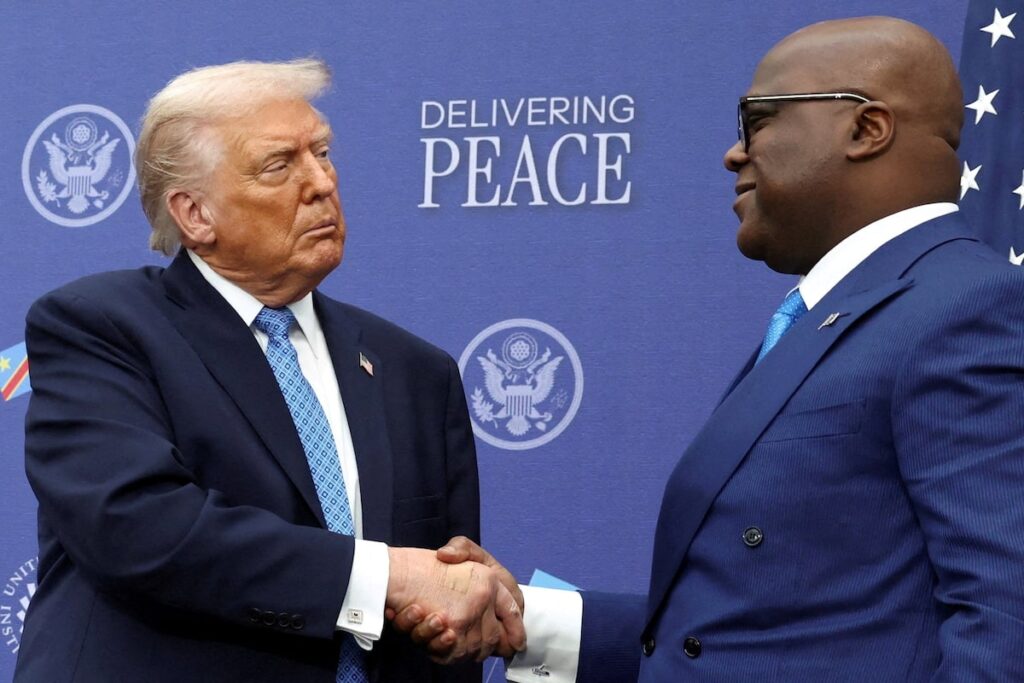
The operation, announced by Lieutenant General Nduru Jacques Ychaligonza, deputy chief of staff of the Congolese armed forces, represents the most concrete step to date in implementing a U.S.-brokered peace agreement signed in Washington last June between Congo and Rwanda — and comes just two weeks after officials from both countries met in the American capital to agree on de-escalation steps.
“Willingly or By Force”
“They must hand over their weapons, willingly or by force,” Ychaligonza told reporters in the northeastern city of Kisangani, where he had been dispatched to oversee preparations. “We do not need bloodshed.” The first phase of the operation will focus on persuasion — encouraging fighters to surrender voluntarily at a reception centre set up in Kisangani. Those who lay down arms will eventually be transferred to Rwanda.
The FDLR’s presence in eastern Congo has been a persistent source of tension between Kinshasa and Kigali for decades. Rwanda has repeatedly demanded that Congo neutralise the group, making it a recurring sticking point in bilateral relations and a major obstacle to regional stability.
M23 Pullback
Congo, for its part, has long accused Rwanda of backing the M23 rebel movement — a charge Rwanda denies — which seized large swathes of eastern Congo following a lightning military offensive last year. Notably, in the days following the army’s disarmament announcement, M23 fighters pulled back from at least a dozen villages in Lubero territory, North Kivu — though a spokesperson described the movements as routine troop rotation rather than a strategic withdrawal.
The U.S. Lever
The U.S. has sought to use both carrot and stick to push the peace process forward. Alongside brokering the June peace agreement, Washington imposed sanctions in early March on Rwanda’s defence forces over their backing of M23.
Whether the disarmament operation produces lasting results will depend on the willingness of both Kinshasa and Kigali to maintain pressure — and on whether FDLR fighters who surrender do so in sufficient numbers to genuinely degrade the group’s military capacity.