
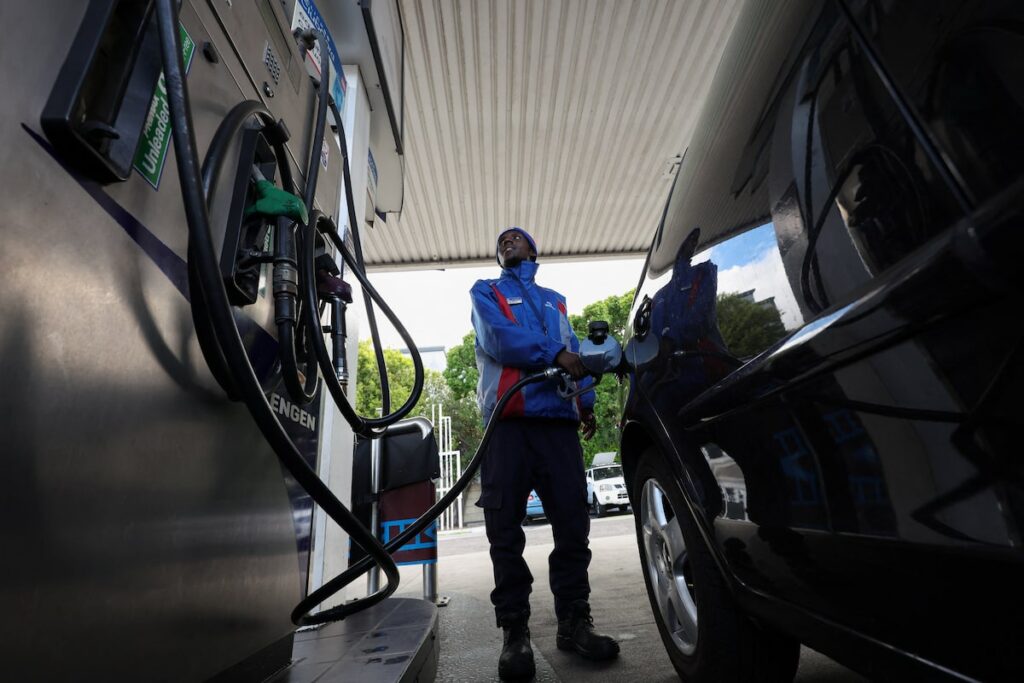
South Africa’s government has announced a temporary three-rand-per-litre reduction in the general fuel levy — effective for one month — as the fallout from the U.S.-Israeli war on Iran pushes domestic fuel prices to levels that are squeezing household budgets and threatening economic activity across Africa’s most industrialised economy.
The reduction, announced jointly by the finance and petroleum ministries on Tuesday, is designed to be fiscally neutral — meaning the government will recoup the foregone tax revenue through other mechanisms rather than allowing the measure to widen the budget deficit. The ministries added that a broader package of household and sectoral support measures was under development.
Import Dependency
South Africa imports the vast majority of its fuel and is therefore acutely exposed to fluctuations in international crude prices. When oil markets tighten — whether through supply disruption, geopolitical risk premiums, or shipping route uncertainty — the knock-on effect at the pump arrives within weeks.
The fiscal neutrality condition is significant. Previous fuel price relief measures have sometimes been funded through borrowing, adding to South Africa’s already elevated public debt-to-GDP ratio. By promising to offset the revenue loss through other mechanisms, the government is signalling an intent to avoid compounding the fiscal challenge with additional borrowing — even as it responds to political pressure to offer relief at the pump.
A One-Month Reprieve
For ordinary South Africans — many of whom live in areas where car ownership is not a luxury but a necessity for accessing employment, schools, and healthcare — the difference of three rand per litre, accumulated over a month of commuting, can represent a meaningful portion of disposable income. Consumer groups have been pressing for more structural relief.
The government has acknowledged the pressure on households and key economic sectors, with a wider support package expected in the coming weeks. For now, the measure offers a short-term buffer — a one-month reprieve in an environment where the structural challenge of energy cost inflation driven by Middle Eastern turmoil is set to persist.