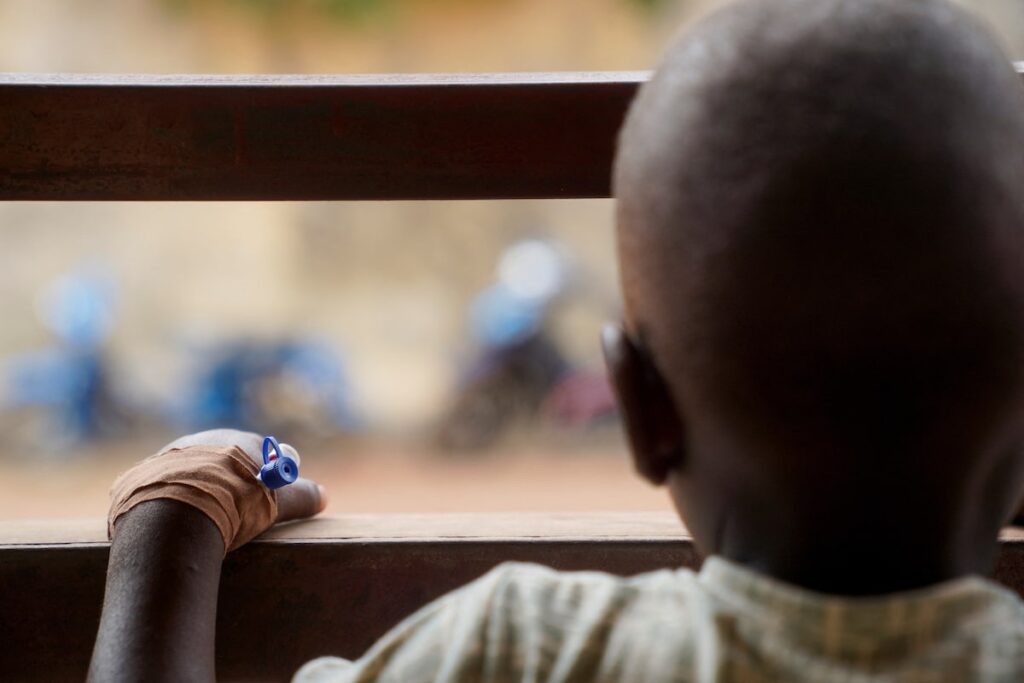
When the United States froze its foreign aid programmes in January 2025, the shockwave hit Nigeria’s HIV treatment infrastructure hard and fast. The United States had been funding approximately 90 percent of Nigeria’s HIV treatment costs — leaving a fragile healthcare system suddenly exposed. Treatment centres shuttered. Drug supplies dwindled. And for the two million Nigerians living with HIV, the future looked terrifyingly uncertain.
But in the dusty village paths of Benue State, a quiet army of volunteers stepped into the breach.
Josephine Angev, a 40-year-old community champion, walked door to door for months — tracking down patients who had dropped off treatment, counselling them to return to care, and delivering medicines where the formal supply chains had collapsed. “They don’t understand the implications,” Angev said of the patients she visited, many of whom had no idea that stopping antiretroviral therapy could kill them within months.
A System Under Siege
The scale of the crisis was immense. In Benue’s capital Makurdi, all 10 treatment centres closed for an entire month. The World Health Organization warned that medication might run out entirely. Patients who had grown accustomed to collecting supplies lasting six months were suddenly reduced to week-old rations. A UNAIDS tracker suggested 200,000 fewer Nigerians were receiving HIV treatment in the months immediately following the aid freeze.
Yet volunteers with the Afrocab community support network — a pan-African non-profit — mounted a remarkable response. Coordinated by figures like Dinah Adaga, who managed teams across Benue State, they traced addresses, knocked on doors, and worked to reconnect patients with care centres the moment new funding reopened doors.
A Recovery Story
The results were extraordinary. Between June and December 2025, the volunteers brought more than 1,000 people in Benue State back into care — including 95 children under the age of five. By the end of 2025, data showed 1.7 million Nigerians on HIV treatment, a marginal increase over the 1.6 million on treatment in 2024.
The Nigerian government moved quickly too, allocating a $200 million emergency health funding package within six weeks of the crisis. The United States issued a waiver for life-saving aid, including antiretrovirals, in February 2025. And in December 2025, both governments signed a landmark $5.1 billion health agreement for 2026–2030.
The Prevention Gap
Prevention services remain harder to rebuild. Bright Oniovokukor, who coordinates the Civil Society for HIV/AIDS in Nigeria, noted that access to preventive drugs dropped from 43,000 people in November 2024 to below 6,000 by April 2025. Condom distribution fell by 55 percent. More than one million fewer people were tested for HIV in 2025 compared with 2024.
For Josephine Angev, the work continues. In Benue State, she shows up at doorsteps with medicines, counsel, and persistence. “It can be exhausting,” she said. “But we do it so lives that might have been lost are instead restored.”
The volunteer model that sustained Nigeria’s HIV response through its darkest months is now being studied by health agencies across the continent as a template for building resilience into Africa’s AIDS response.