

Kenya’s Lamu Port Emerges as Africa’s New Trade Lifeline Amid Middle East War
When Iranian air strikes hit Dubai’s Jebel Ali port on March 1st, 2026 — just four days after the United States and Israel launched their war on Iran — few anticipated that a sleepy Kenyan island would emerge as one of the conflict’s strangest beneficiaries.
Thousands of high-end cars, originally destined for the UAE and shipped from Yokohama, Japan, have been diverted to Kenya’s Lamu Port, where they now sit in temporary storage awaiting a resolution to the Hormuz Strait shipping crisis.
From Sleeping Giant to Shipping Haven
Lamu Port, part of the ambitious $23 billion LAPSSET Corridor project linking South Sudan and Ethiopia to Kenya’s Indian Ocean coast, has been quietly building toward relevance since operations began around 2021. Now it is suddenly at the centre of a global rerouting of maritime commerce.
More than 4,000 vehicles — including dozens of gleaming Porsches — were unloaded from two ships belonging to Italy’s Grimaldi Group last week alone. Port Manager Abdulaziz Mzee told local media the port is expecting another vessel carrying 5,000 vehicles in the coming days.
“The ships with cargo destined for the Gulf are more or less just wandering or drifting at sea,” Mzee said, acknowledging the surreal circumstances. “It is not something to celebrate, because people there are suffering and facing difficulties, but at the same time it is a commercial blessing.”
The Strait of Hormuz Crisis
The importance of the Hormuz Strait cannot be overstated. Approximately 20 percent of the world’s oil and a massive share of global container shipping pass through the narrow waterway between Oman and Iran each year. With Iranian forces striking Gulf shipping lanes in retaliation for the US-Israel offensive, major insurers and shipping companies have effectively abandoned the route.
The rerouting has turned African ports from Morocco’s Tangier to South Africa’s Durban into critical arteries of global trade. Kenya Ports Authority wasted no time, announcing on social media that Lamu was “geared up for a spike” in traffic.
A Strategic Bet on Africa’s Logistics Future
Lamu’s moment in the spotlight reflects a broader shift in global shipping patterns that analysts say could outlast the current conflict. With supply chain resilience now a priority for multinational corporations, East Africa’s position as an alternative to Middle Eastern chokepoints looks increasingly attractive.
The port was designed with the ambition of becoming Africa’s leading deep-water transshipment hub, capable of handling the largest vessels afloat. Until now, that vision had been slowly realised but never dramatically validated. The Hormuz crisis has done in weeks what marketing campaigns could not.
For Lamu’s small island community — a UNESCO World Heritage Site known more for its Swahili culture and quiet beaches than global commerce — the transformation is surreal. Local authorities are reportedly scrambling to manage the surge in activity without disrupting the island’s delicate environment and heritage sites.
Wider Implications for African Trade
The boost to Lamu comes alongside similar spikes at Morocco’s Tangier Med, South Africa’s Durban, and ports in Tanzania and Mozambique. Analysts say the rerouting illustrates how African maritime infrastructure, long overlooked in favour of established Middle Eastern and European hubs, is increasingly viable as global shipping patterns shift.
For landlocked neighbours Ethiopia and South Sudan, both already tied to the LAPSSET Corridor through planned pipeline and rail links, the increased activity at Lamu is a timely economic signal. Access to a functional, busy port on the Indian Ocean could reshape their own export prospects.
The conflict continues to rage, and the ultimate fate of diverted cargo — and the people waiting for those vehicles in Dubai — remains uncertain. But on Lamu’s shoreline, cranes are working around the clock, and for once, the world’s shipping eyes are on Kenya.
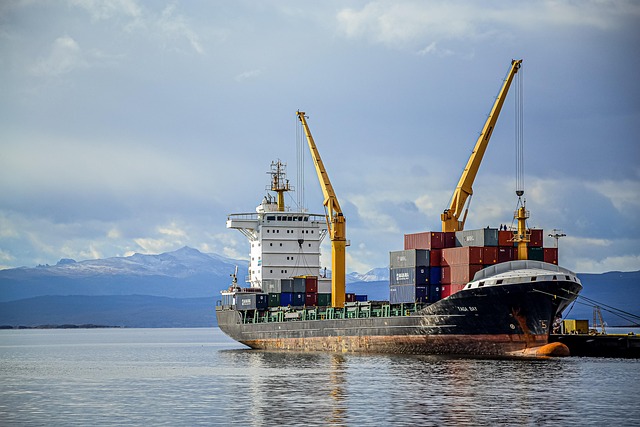
Image: Container port with shipping cranes. Source: hunt-er / Pixabay (free commercial use)